AI agent guide
What is Meta Muse?
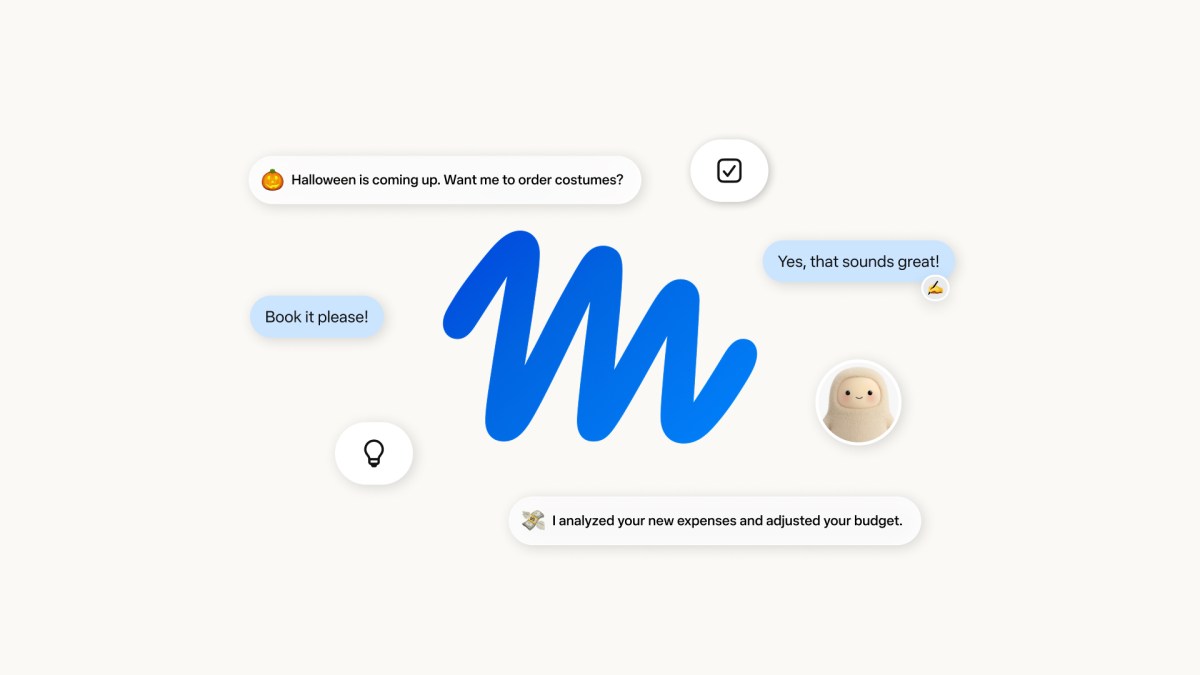
Meta Muse is Meta's personal AI agent. Instead of only answering questions, it takes action — booking travel, sending email, shopping, and advancing long-term goals — and checks with you before sensitive steps. This guide covers its confirmed capabilities, how it works, availability, pricing, and honest limitations, with everything Meta claims attributed to Meta.
Last reviewed · Sources listed at the end
Meta Muse at a glance
- Announced
- Sept 8, 2026 (Meta Newsroom)
- What it is
- A personal AI agent, not just a chatbot
- Availability
- US only at launch: iOS, Android, muse.ai, WhatsApp
- Model
- Powered by Meta's Muse Spark
- Price
- Free for most use, with paid plans for heavier use
- Payments
- Checkout via Link by Stripe (one-time-use cards)
What Meta Muse is
Meta introduced Muse on Sept 8, 2026, calling it “the world's first personal AI agent built for everyone.” Meta frames it as an upgrade from a chatbot: an always-on agent that works on your behalf, learns from your conversations, and turns goals into plans. It is built by Meta Superintelligence Labs, the same unit behind Meta's Muse-branded models and tools.
The practical difference is autonomy. Meta says people tell Muse what needs to get done, and it takes action — powering through multi-step tasks such as sending an email or booking travel, and staying with longer goals such as planning a trip or lowering a recurring bill.
Confirmed capabilities
- Send email, book travel, and work through multi-step errands on your behalf.
- Open a browser, fill out forms, and negotiate — such as when searching for a lower bill.
- Take a long-term goal and turn it into a personalized plan that it advances on its own.
- Keep working after you close the app, then return when something changes or it needs approval.
- Remember details you mention once and act on them — for example, turning a saved recipe into a grocery list.
- Check with you before sensitive actions, such as sending an email or making a purchase.
How does Meta Muse work?
Muse is a cloud agent, not something running on your phone's processor. Meta designed a dedicated secure virtual machine for it and a separate approval agent to gate what it sends to the internet. Here is how the pieces fit together, based on Meta's own description.
A secure virtual computer per user
Each Muse agent runs on Muse Secure VM, a dedicated cloud virtual machine with its own browser. Meta says the VM holds both the agent and the data and credentials for any connected service, isolated so no one else's agent can reach it.
A second agent approves outbound actions
A separate Sentinel agent runs on the same machine, separated from Muse at the system level. Per Meta, nothing Muse does reaches the internet unless Sentinel approves it, and Sentinel asks the person for permission when needed.
Credentials stay out of the model's view
Meta states Muse has no visibility into passwords or payment methods. Credentials go into secure storage so Muse can use them without seeing them, including passwords typed directly into the browser.
Checkout with Link by Stripe
Muse can pay with Link built by Stripe, which generates a one-time-use card so real card details stay hidden. Meta says Muse is the first AI agent covered by Link's purchase protections (free coverage for damaged or lost items, price drops, no-fee returns, and a return guarantee on eligible purchases).
Memory you can edit
Muse remembers what matters to you and can suggest ideas unprompted. Meta says you can tell it to forget specific things, choose which apps it connects to, change access, or disconnect a service at any time.
Muse vs Muse Spark vs Muse Code vs Muse Image
“Muse” is now a family name at Meta, which makes search results confusing. These are related brands, not the same product.
| Name | What it actually is |
|---|---|
| Meta Muse | The personal AI agent app this page covers — the thing you message in the Muse app, muse.ai, or WhatsApp. |
| Muse Spark | Meta's underlying model family. Meta says Muse the agent is powered by Muse Spark (the launch post links to Muse Spark 1.3). It is the engine, not the app. |
| Muse Code | Meta's coding agent for software engineering tasks, announced separately in August 2026. Different product, same brand family. |
| Muse Image | Meta's image-generation product, announced July 2026. Not the personal agent. |
| Muse Video | A separate Muse-branded video product. Again, not the personal agent. |
Availability and pricing
Where: Meta says Muse is rolling out in the US on iOS, Android, and muse.ai, and that you can also message it in WhatsApp. Meta says AI glasses are coming soon. AP reported the launch is for people 18 and over.
Pricing (as Meta states it): Muse is “free for most of what people need, with subscription plans for people who want to do more.” Meta's launch page does not publish plan names, prices, or usage limits.
Reported plan pricing: TechRadar, which tried Muse, reports in-app tiers of $20 per month for “Power” and $100 per month for “Maximum.” That is TechRadar's reporting, not a figure published on Meta's launch page, and Meta may change it. Verify current plans inside the app before buying.
Limitations and what to watch
- US-only at launch. Meta says Muse is rolling out in the US on iOS, Android, muse.ai, and WhatsApp, with AI glasses coming later.
- Plan details are thin. Meta says Muse is free for most of what people need with subscription plans for heavier use, but the launch page does not publish plan names, prices, or usage limits.
- Some advertised features are not live yet. Meta lists Shop Pay and 1Password support as coming soon, and a fully encrypted Muse Confidential VM as coming later this year — none of these were available at launch.
- Reliability is still an open question. Reuters reported that internal Meta posts described failure modes that made Muse unreliable for some monitoring tasks, alongside concerns about how the agent handles sensitive data. Meta did not comment to Reuters on those specific incidents.
- Privacy depends on trust. Muse asks for access to apps and personal data. Meta has published safety and security design notes, but the tradeoff is real, and reviewers have described handing over a digital life as uncomfortable.
- No documented MCP support. Meta's launch materials do not describe Model Context Protocol support, and AIDATAHUB has not added a catalog record it cannot verify.
Meta Muse FAQ
What is Meta Muse?
Meta Muse is a personal AI agent from Meta, announced on Sept 8, 2026. Meta describes it as an agent that does the work rather than only answering questions: it sends email, books travel, shops, fills out forms, and advances long-term goals. It is available in the Muse app, at muse.ai, and through WhatsApp, currently in the US.
How does Meta Muse work?
Muse runs on Muse Secure VM, a dedicated cloud virtual machine with its own browser. A separate Sentinel agent on the same machine approves anything Muse sends to the internet and asks you for permission when needed. Meta says Muse has no visibility into your passwords or payment methods, checks with you before sensitive actions like sending email or buying something, and shows an audit trail. It can keep working after you close the app and return when it needs approval.
Is Meta Muse free?
Meta says Muse is free for most of what people need, with subscription plans for people who want to do more. Meta's launch page does not publish the plan prices or limits. TechRadar, reviewing Muse, reports in-app tiers of $20 per month for Power and $100 per month for Maximum; treat those figures as reported by TechRadar, not confirmed by Meta on the launch page.
Where is Meta Muse available?
At launch, Meta says Muse is rolling out in the US on iOS and Android, on the web at muse.ai, and through WhatsApp. Meta says it is coming soon to AI glasses. AP reported the launch is for people 18 and over.
Is Meta Muse the same as Muse Spark?
No. Muse is the personal agent app you interact with. Muse Spark is Meta's model family that powers it — Meta's launch post links to Muse Spark 1.3 as the model behind Muse. Meta also uses the Muse name for unrelated products including Muse Code (coding), Muse Image (image generation), and Muse Video.
Does Meta Muse have access to my passwords and payment methods?
Meta says Muse itself has no visibility into your passwords or payment methods. Credentials go into secure storage so the agent can use them without seeing them, and payments can run through Link by Stripe, which issues a one-time-use card. Meta also says conversations and VM data are not shared with its ad systems, and that you can opt out of having interactions used to train its models.
Can Meta Muse buy things and send emails without asking?
Meta says Muse checks with you before sensitive actions such as sending an email or making a purchase, and keeps a complete audit trail of what it has done and plans to do. It returns to you when it needs approval.
Sources
Claims about Muse's design, security model, capabilities, and pricing are statements Meta makes about its own product and are attributed as such. Independent reporting is used for market context and criticism.
Primary (Meta and Stripe)
- Meta Newsroom — Introducing Muse (Sept 8, 2026)
- Meta — How We Built Safety Into Muse
- Meta — How We Designed Muse
- Meta Research — Introducing Muse Spark 1.3
- Stripe Link — what's covered with protections
- Official product site — muse.ai
Reporting and reviews
- TechCrunch — Meta's AI agent Muse is now the No. 2 app in the US (Sept 10, 2026)
- AP News — Meta launches personal AI agent, Muse (Sept 8, 2026)
- Reuters (via Khaleej Times) — Meta launches AI agent Muse (Sept 9, 2026)
- Wired — Meta Releases Muse, a Personal AI Agent (Sept 8, 2026)
- TechRadar — I tried Meta's new Muse AI agent (Sept 14, 2026)
- Business Insider Africa — Muse soars to the top of the App Store (Sept 18, 2026)
More context: browse theAI agent directory or read ourdata freshness and sources policy.